
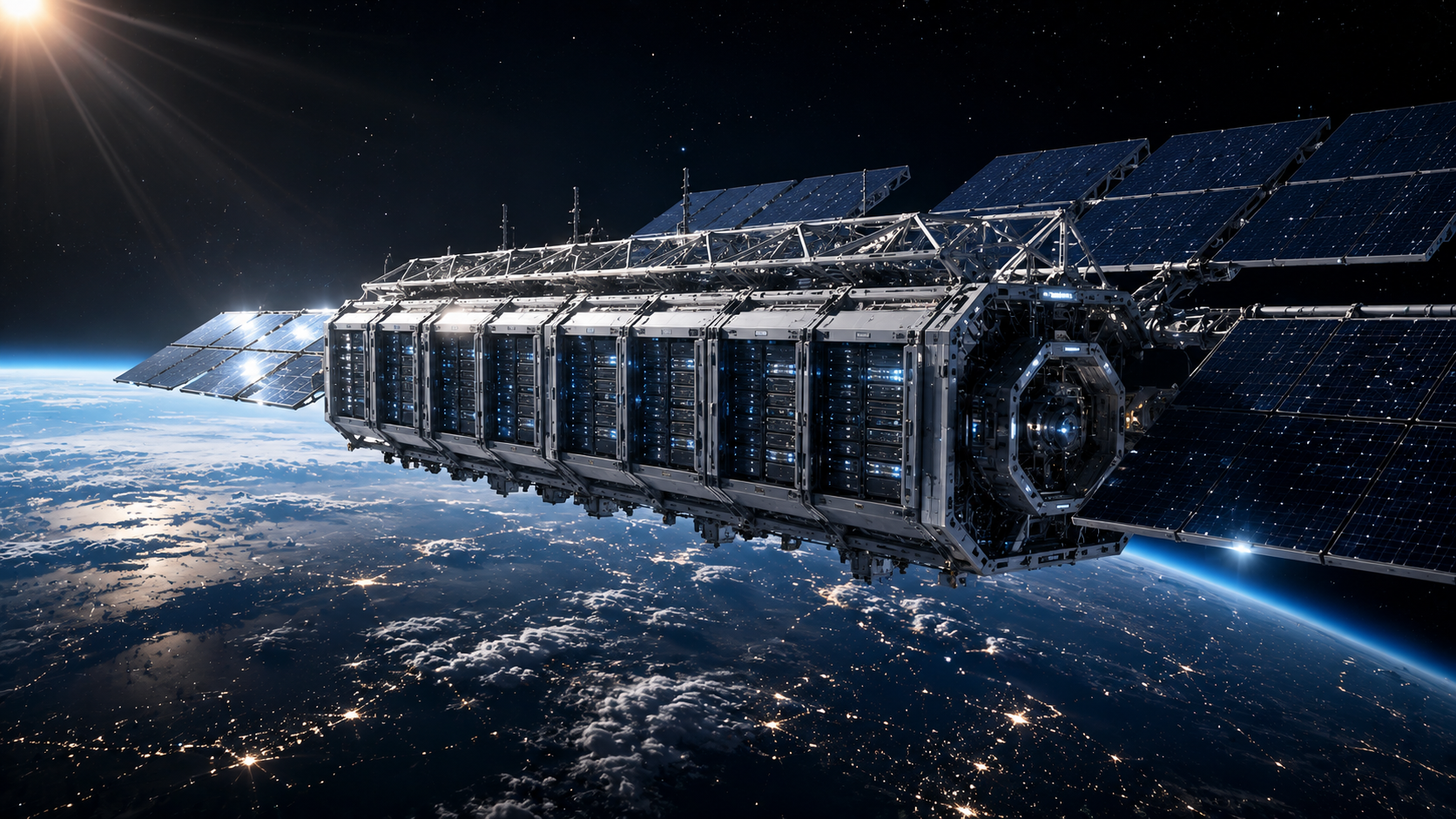
A few days ago I wrote about underwater data centers and why they matter.
What interested me was not just the novelty of putting compute beneath the ocean. It was what that move says about the pressure building inside AI infrastructure: power, cooling, land, water, and deployment constraints are becoming serious enough that data center design is starting to move into places that used to sound impractical.
Space is the next version of that conversation.
And yes, it still sounds a little ridiculous.
But serious people are now talking about it seriously.
Reuters reported in May that Google has discussed launches with SpaceX and other partners for Project Suncatcher, a plan to explore orbital data centers built from solar-powered satellites equipped with Google TPUs, with a prototype targeted around 2027. Reuters also reported that Anthropic committed to using SpaceX’s Colossus 1 data center in Memphis and had expressed interest in further collaboration on space-based computing infrastructure.
That does not mean orbital AI clouds are around the corner.
It does mean the idea has moved beyond science-fiction cocktail talk and into the category of “expensive, risky, but apparently real enough to discuss in boardrooms.”
This is not really a story about space
It is a story about constraints.
The AI race is increasingly becoming an infrastructure race, and infrastructure is increasingly becoming a physics problem.
The questions are no longer just:
- which model is better
- who has more GPUs
- who has the better software stack
They are also:
- where does the power come from
- how do you remove the heat
- how fast can you deploy capacity
- how much land and water does it consume
- and what happens when Earth-based infrastructure starts to bottleneck the next phase of scaling
That was the real story behind underwater data centers.
And it is the real story here too.
Space data centers are not interesting because they are futuristic. They are interesting because they are what the conversation starts to sound like when people begin looking for ways around terrestrial limits.
The case for orbital compute is not completely irrational
The intuitive argument for space goes something like this:
solar energy is abundant above the atmosphere radiating heat into space sounds cleaner than struggling with terrestrial cooling systems you avoid some land, water, and permitting constraints on Earth and for some workloads, latency may matter less than energy access and resilience
That last point is important.
Not all compute needs to sit close to the user.
Reuters reported in January 2025 that Lonestar Data Holdings was working to place a physical data center on the lunar surface focused on storage and disaster recovery, not latency-sensitive processing. The company’s pitch centered on abundant solar power, natural cooling, and a use case where physical distance is tolerable because the service is not trying to support real-time interactive workloads.
That is a useful reminder that “space data center” does not automatically mean “ChatGPT in orbit.”
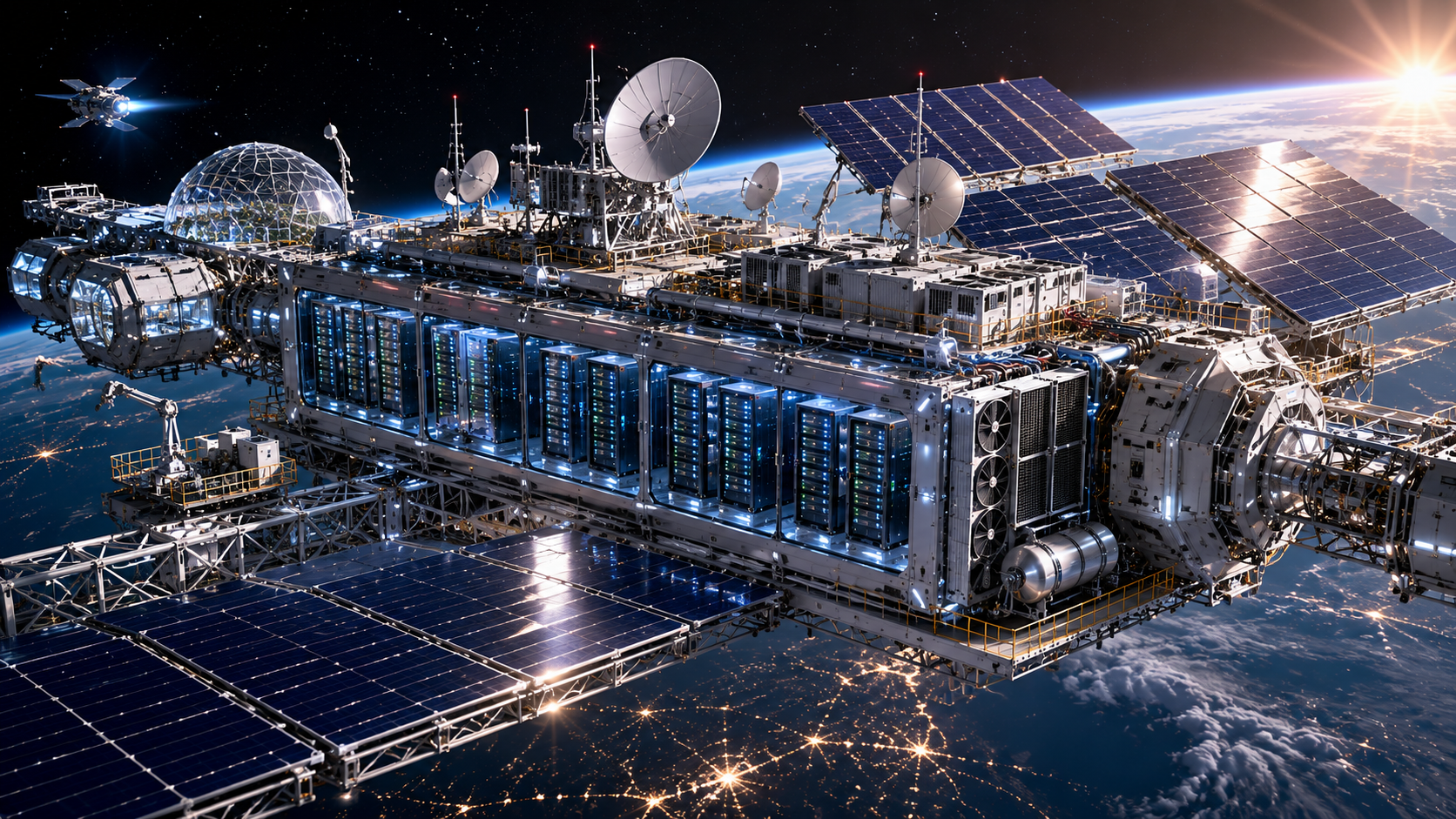
Some of the first viable use cases may be:
- backup and disaster recovery
- cold storage
- sovereign or hardened archival systems
- delayed or batch AI workloads
- highly specialized resilience-oriented compute
Those are very different from the low-latency inference systems people normally imagine when they think about AI infrastructure.
But the economics are still brutal
This is where the hype needs to be checked.
Reuters reported in April that SpaceX itself warned in its filing that its ambitions around space-based AI data centers rely on unproven technologies, involve significant technical complexity, and may never achieve commercial viability. The filing also tied those ambitions to the success of Starship, which is still facing its own developmental and operational risks.
That is a useful counterweight.
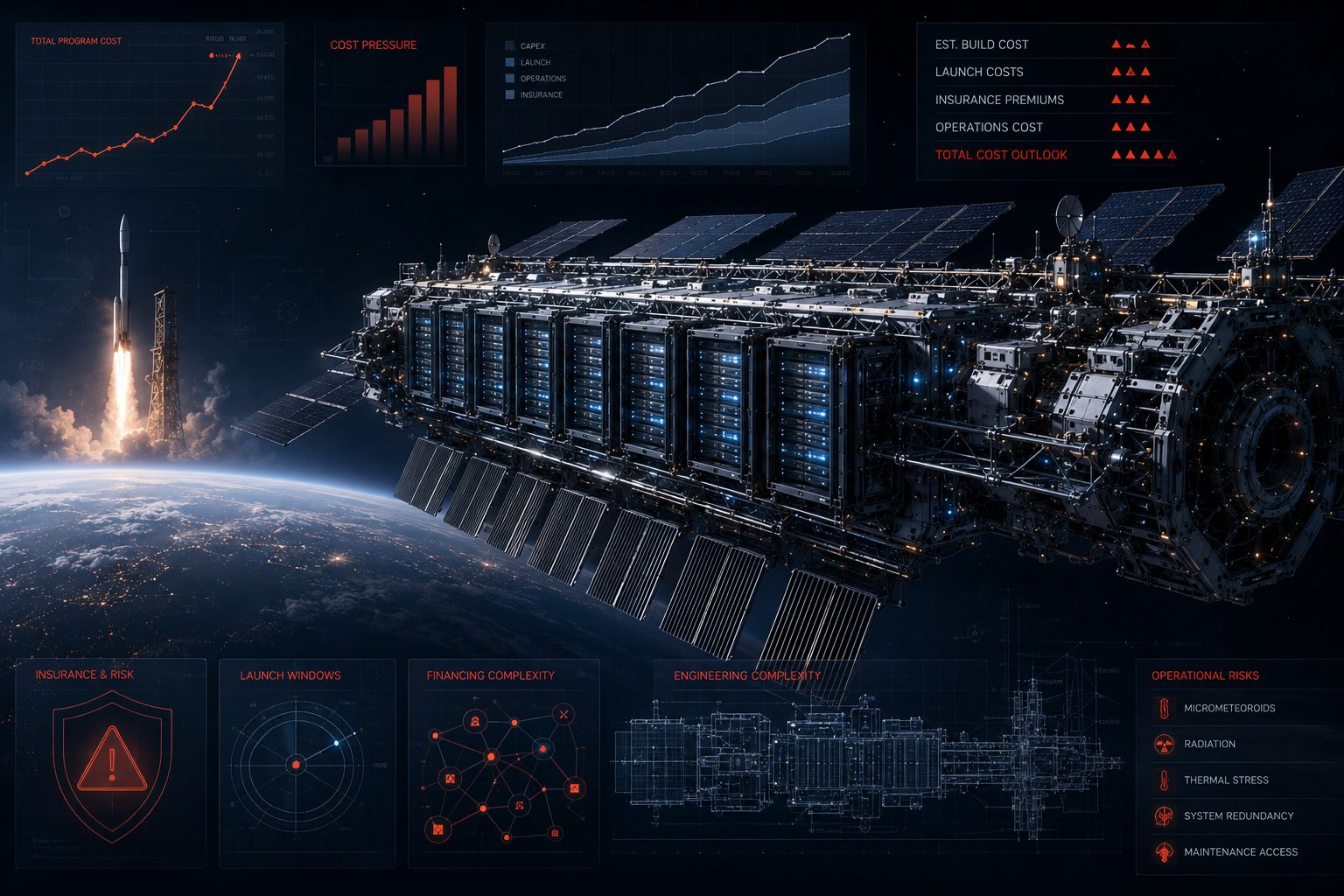
Because the case against space data centers is also obvious:
- launch costs are still high
- hardware replacement is hard
- repair is far harder than on land
- orbital debris risk is real
- radiation and extreme thermal cycling are nontrivial
- latency is a serious problem for many use cases
- financing and insurance are still immature
Reuters reported yesterday that space startups are already seeking insurance for orbital AI data centers, but insurers are struggling with basic questions around how to model the risks and value rapidly evolving AI hardware operating in harsh space environments. The report suggested that the insurance market for these projects will likely remain small until the companies move beyond venture-style experimentation and need larger debt-backed financing.
That tells you where this sits today.
Not mainstream. Not imaginary. Still very early.
This is where the underwater comparison gets interesting
Underwater and space data centers sound like unrelated ideas, but they are actually responses to the same larger pressure.
Underwater data centers are mostly a thermodynamics response.
They try to take advantage of a huge surrounding heat sink, potentially reduce cooling costs, reduce freshwater use, and work around some land constraints.
Space data centers are more of an energy-and-scale response.
They try to imagine a world where compute can move closer to abundant solar energy and farther away from some of Earth’s land, water, and permitting bottlenecks.
Both ideas are forms of escape.
Not escape from technology. Escape from infrastructure constraints.
That is why I think these stories matter.
They tell us less about where the average data center will live in five years and more about how intense the AI infrastructure problem is becoming.
When the solutions people start discussing include “beneath the sea” and “in orbit,” you are no longer talking about ordinary scaling.
The real issue is workload geography
I do not think the future will be: “all data centers move to space.”
Just like I do not think the future will be: “all data centers move underwater.”
What I do think is more plausible is a splintering of workload geography.
Different workloads may increasingly live in different physical environments based on their constraints.
For example:
- low-latency inference may stay Earthbound and close to population centers
- massive training workloads may chase power-rich regions
- resilient storage and backup systems may experiment with lunar or orbital placement
- cooling-intensive edge cases may test underwater or offshore designs
- regulated or sovereign workloads may follow entirely different logic
That is a much more believable future than one universal answer.
The infrastructure map may start to fragment according to the physics and economics of each workload type.
Why this matters for AI strategy
This is not just a space-tech curiosity.
It matters because it changes how we should think about AI competition.
The next phase of the AI race may be decided less by pure model quality and more by who can solve:
- energy supply
- cooling efficiency
- infrastructure economics
- deployment speed
- resilience
- and physical scalability
That is why orbital data centers are worth talking about even if they remain a niche for years.
The fact that the idea is now credible enough to attract discussions involving Google, SpaceX, insurers, and lunar data startups tells you something important: AI infrastructure demand is pushing serious organizations to think beyond the normal boundaries of terrestrial compute.
That is the bigger signal.
My takeaway
I do not think the next wave of AI data centers is simply heading into space.
But I do think the industry is running hard enough into Earth’s limits that space has stopped sounding completely crazy.
That is the important shift.
Underwater data centers were one sign that AI infrastructure is being forced into new physical tradeoffs.
Orbital and lunar data centers are another.
Not because they are obviously the answer.
Because the old answers are starting to look less sufficient.
The real story is not that the next data center is definitely going to space.
The real story is that AI is putting enough pressure on power, cooling, land, and resilience that ideas which used to sound absurd are now entering serious strategic conversation.
And once that starts happening, it usually means the underlying constraint is real.
References
- Reuters. Google in talks with SpaceX for Suncatcher orbital data center project. May 2026.
- Reuters. SpaceX says unproven AI space data centers may not be commercially viable, filing shows. April 2026.
- Reuters. Lonestar’s moonshot: Firm aims to place data center on lunar surface. January 2025.
- Reuters. Space startups seek insurance for orbital AI data centers. June 2026.