
Why I fell in love with Bali.
It wasn't the rice fields or the temples. It was watching a place treat ritual as infrastructure — and what that does to a working mind after a decade of optimising for output.
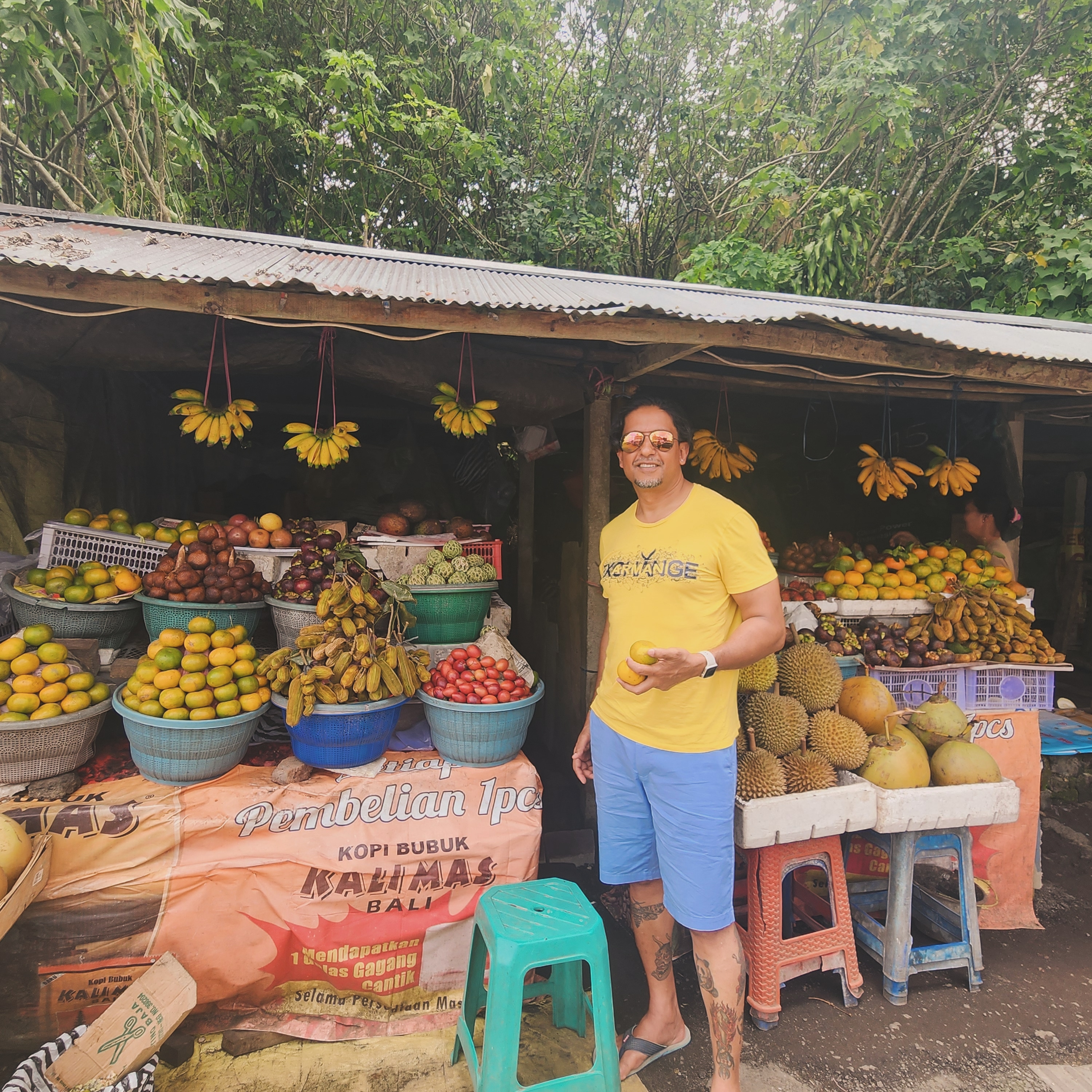
I arrived in Ubud at the end of a long quarter — the kind that ends with you unsure which problems you actually solved and which you simply postponed at higher resolution. The driver from the airport spoke softly. The roads narrowed. By the time I unpacked, rain was falling with intent, the sort that teaches you a place has its own weather etiquette before it teaches you anything else.
I · Light and landscape
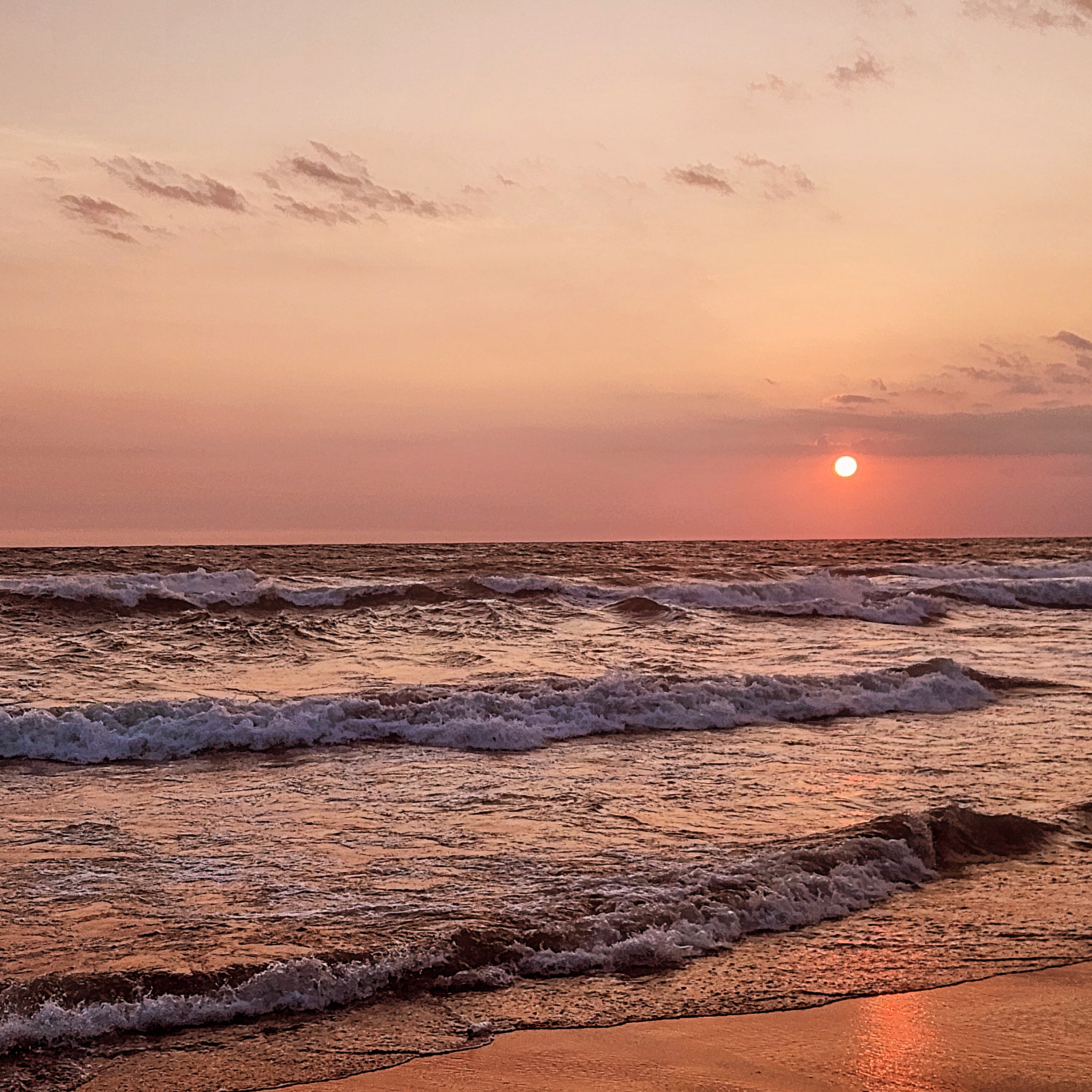
Bali is unfairly beautiful. The greens are too honest, the stone too warm, the air too thick with fragrance and smoke and rain. Then the sun begins its exit — and the island stops pretending subtlety is a virtue. The sky stages a slow dissolve into rose and copper and bruised violet; the horizon looks like someone mixed ink into honey. You find yourself standing still, not because you planned a mindfulness moment, but because your nervous system refuses to waste a single minute of that light. Those sunsets are not decorative; they are a kind of public performance of scale — a reminder that your inbox is not the largest thing in the universe, even when it has been pretending to be.
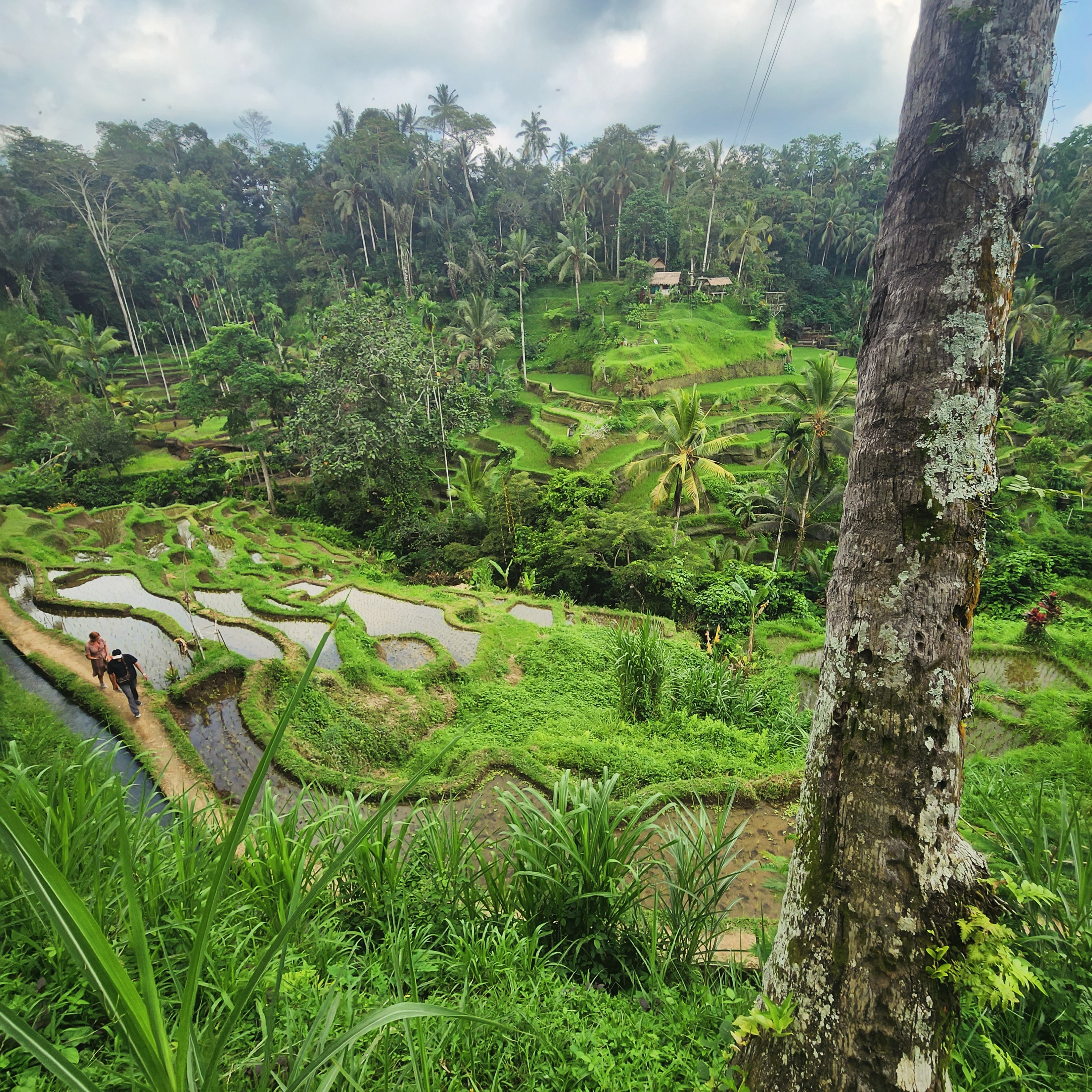
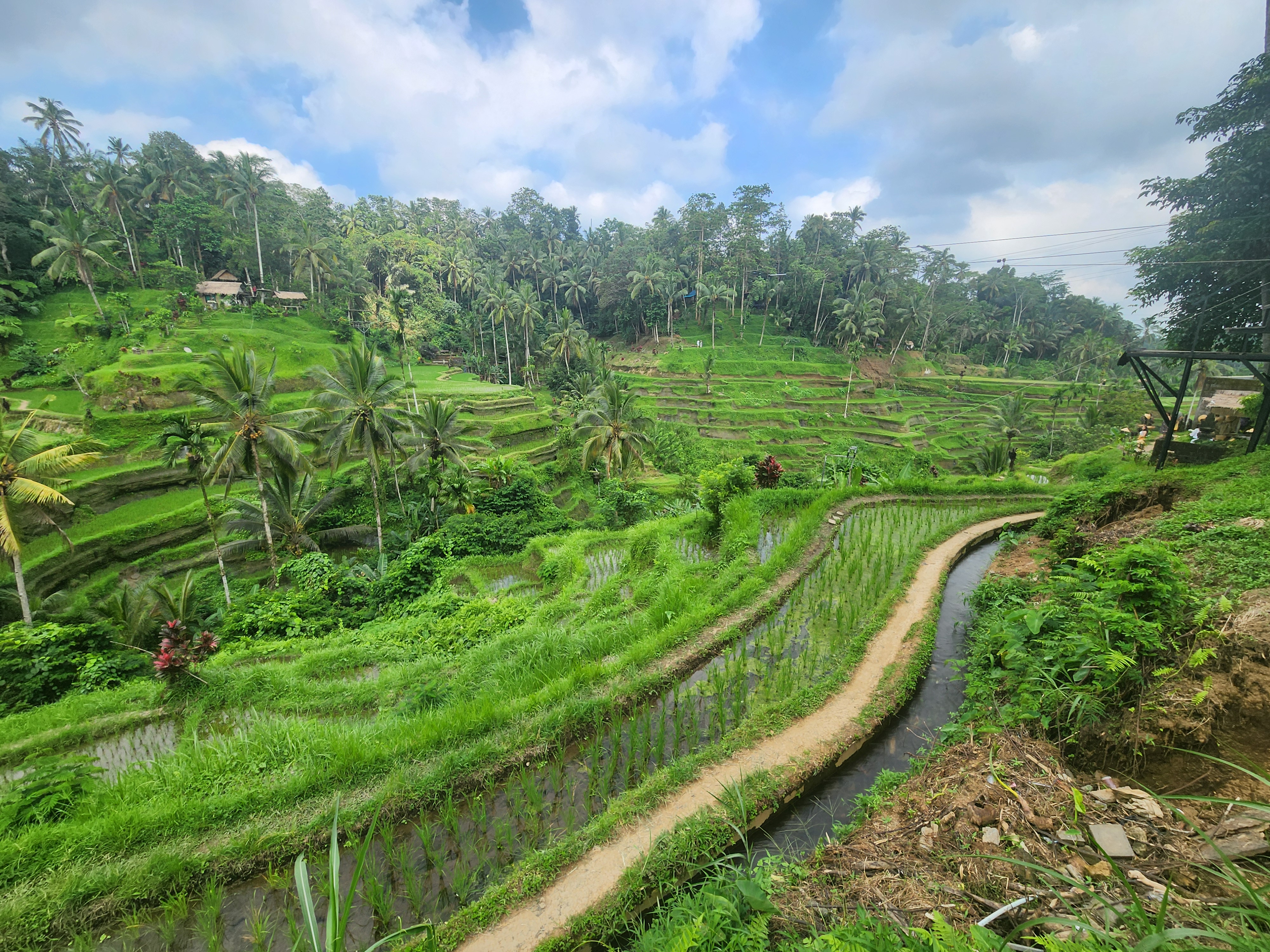
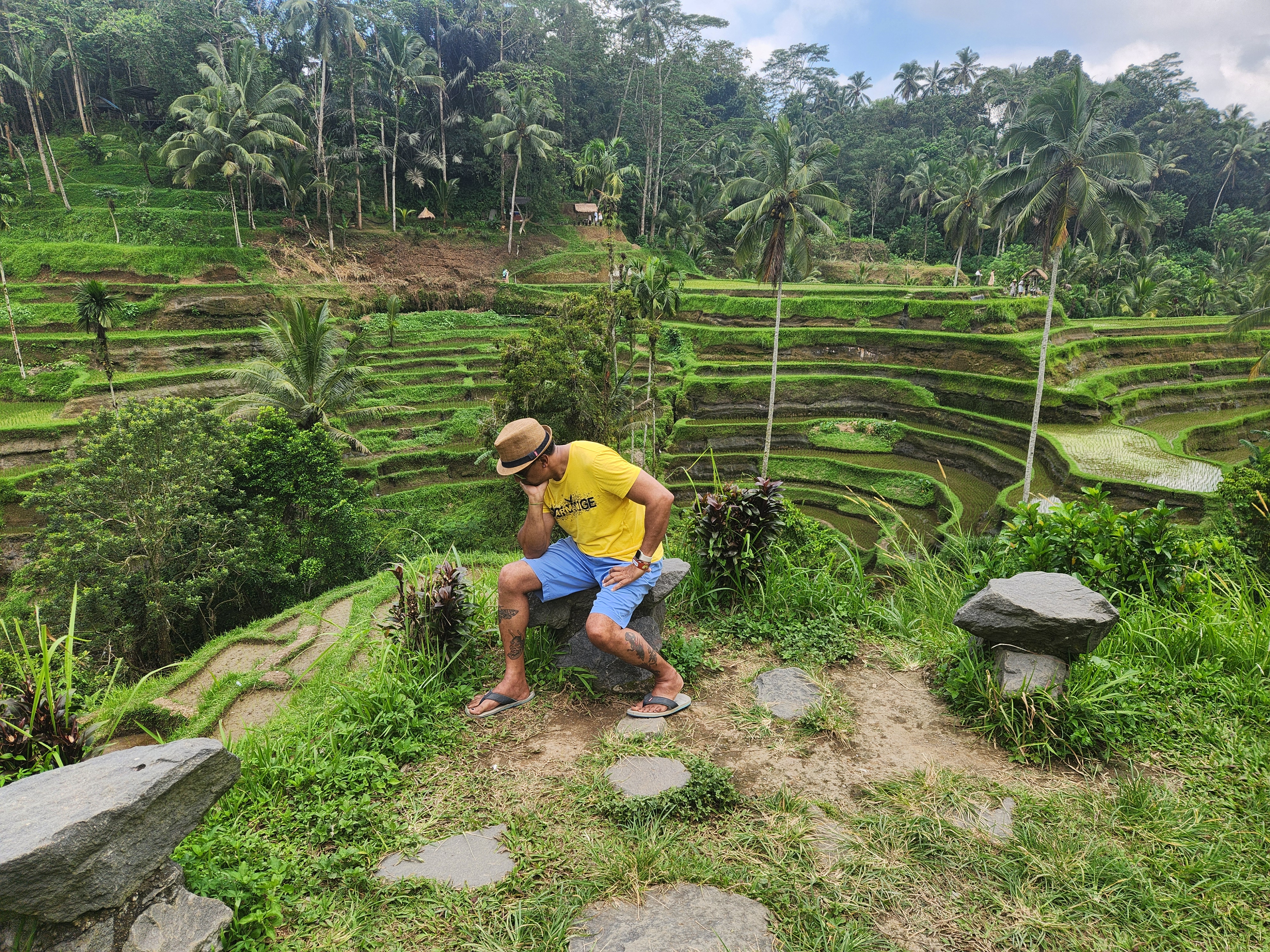
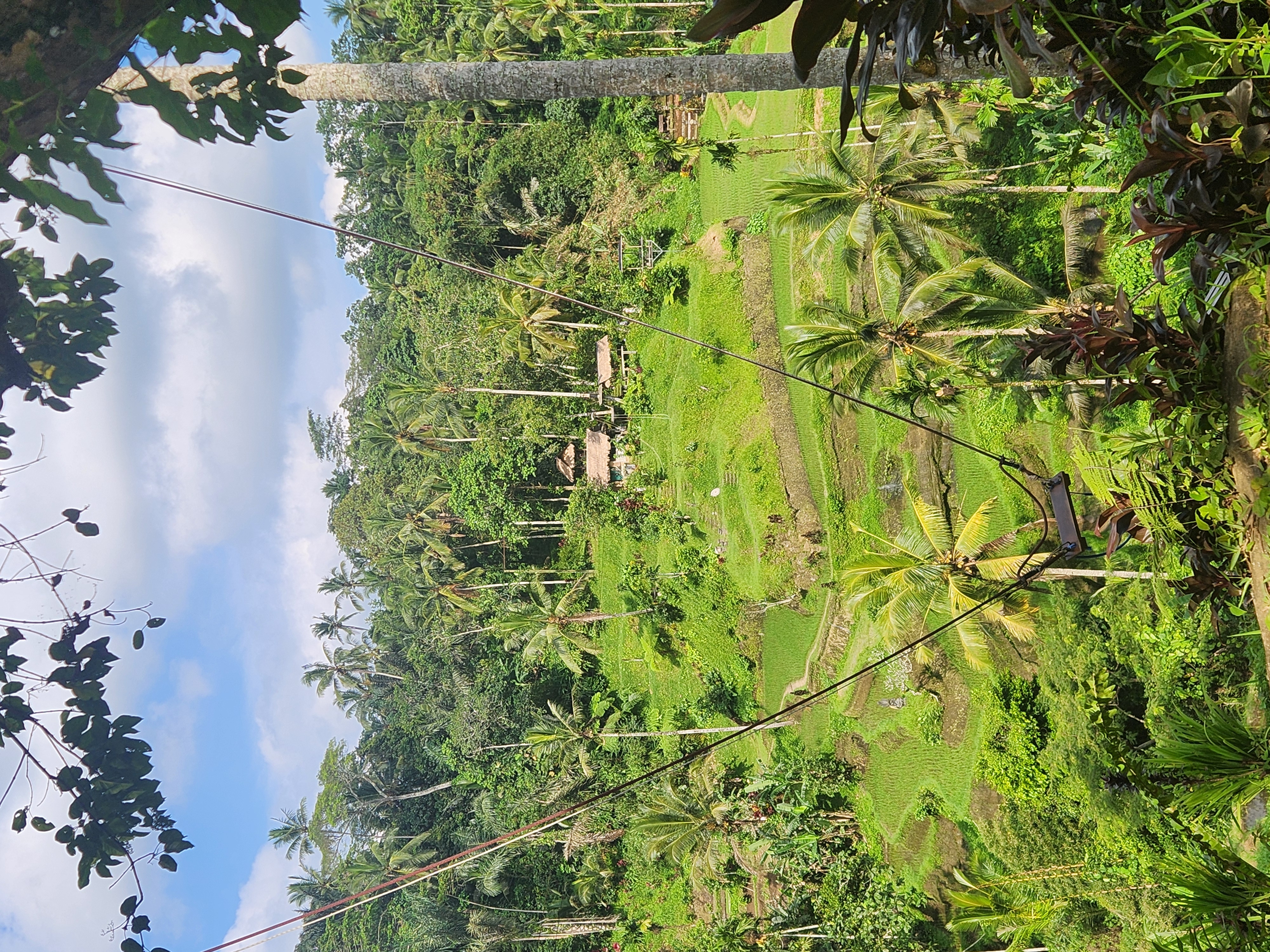
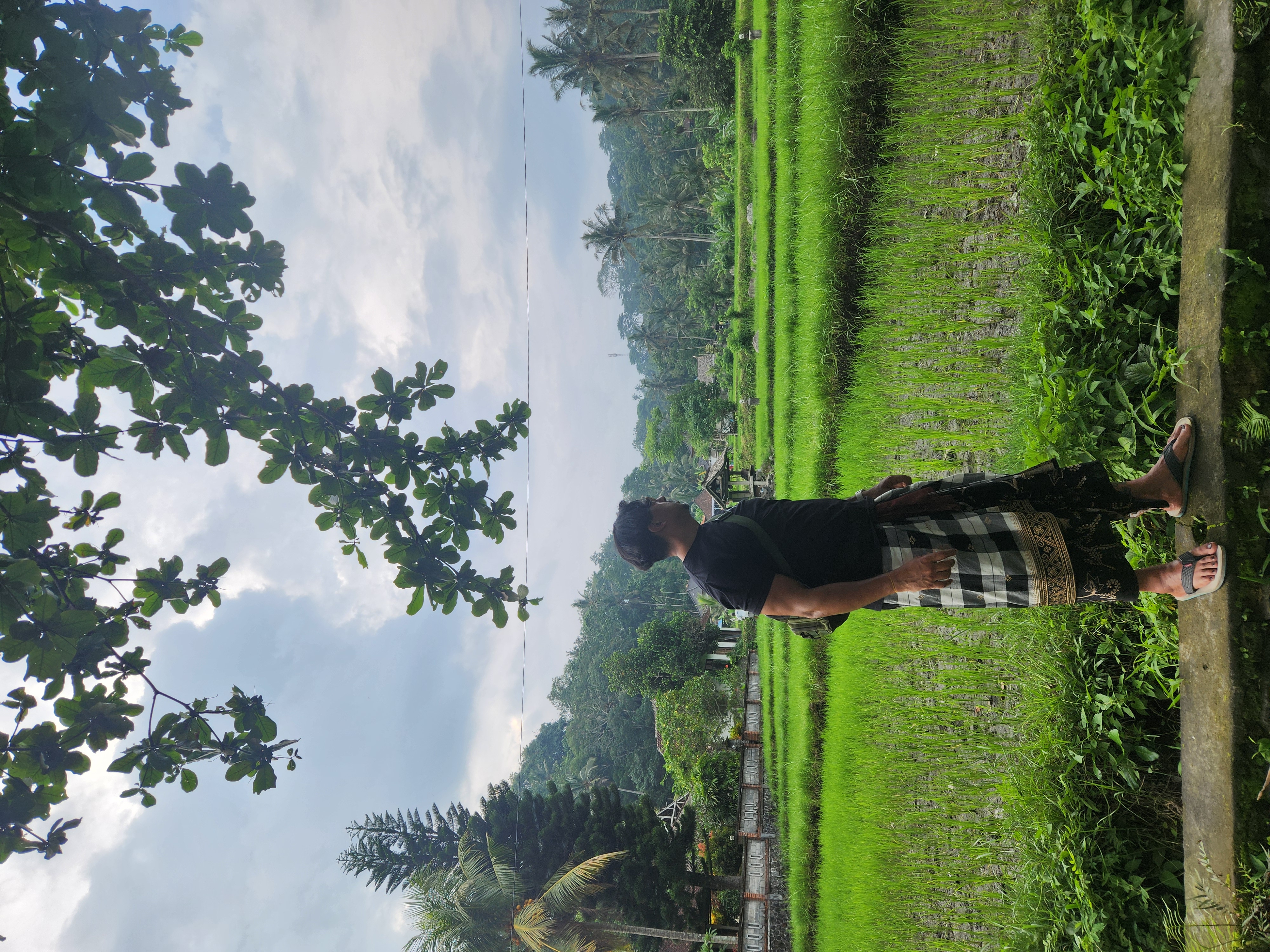
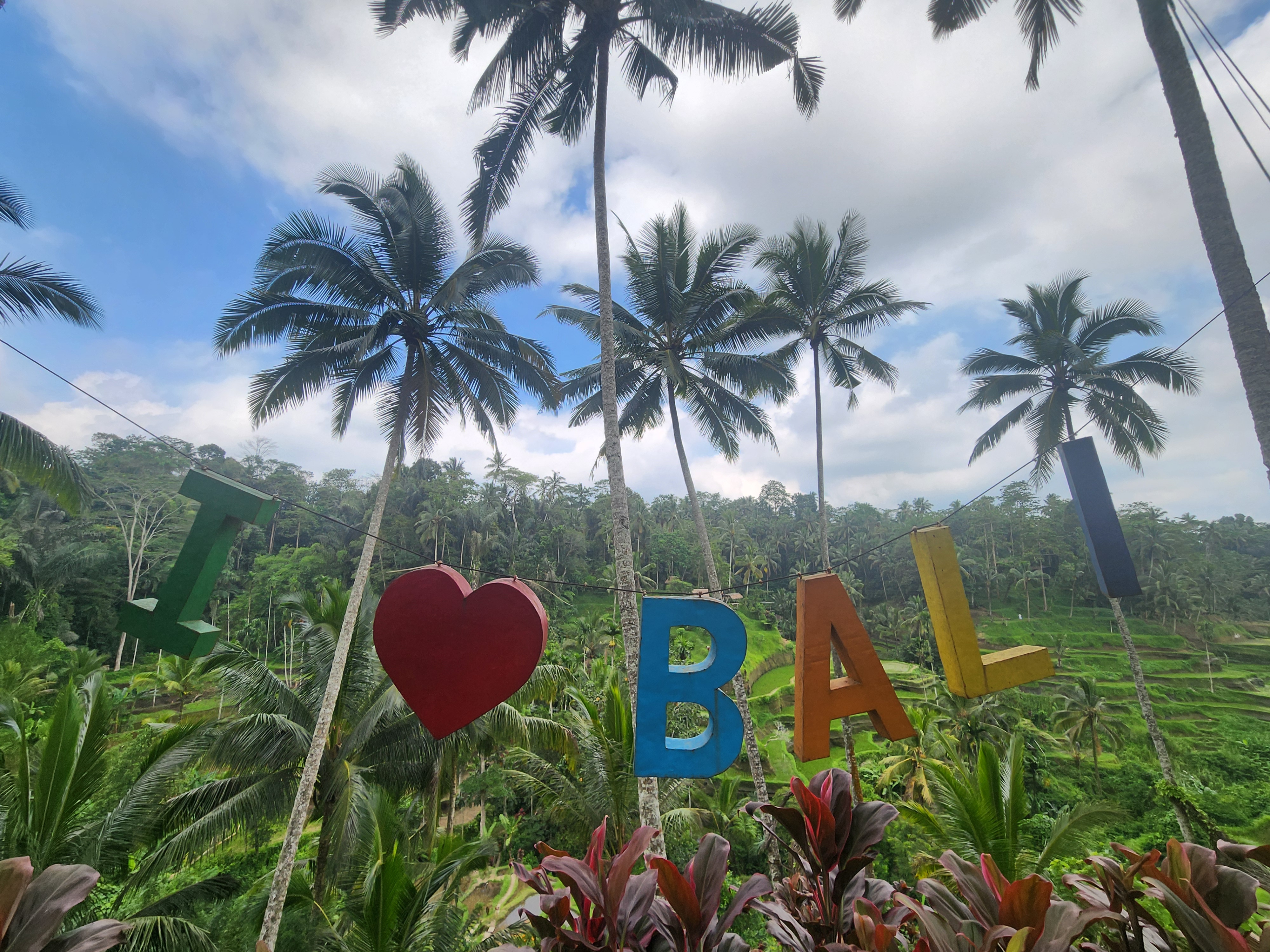
The rice terraces were something else entirely: geometry made out of patience. I could stand at the edge of a drop-off and watch water hold light in the paddies — thin mirrors stitched into the hillside — and feel my shoulders unhook from my ears without anyone instructing me to breathe. It was not performance meditation; it was the real kind, the kind where you forget to check the time because the green has quietly convinced you that nothing off-screen is more urgent than this.
Sometimes I only watched. No lesson to extract, no photo strategy beyond honesty. Just the terraces stepping down the valley like a slow argument for steadiness — proof that a place can be worked for generations and still look like grace.
II · People, prayer, and memory
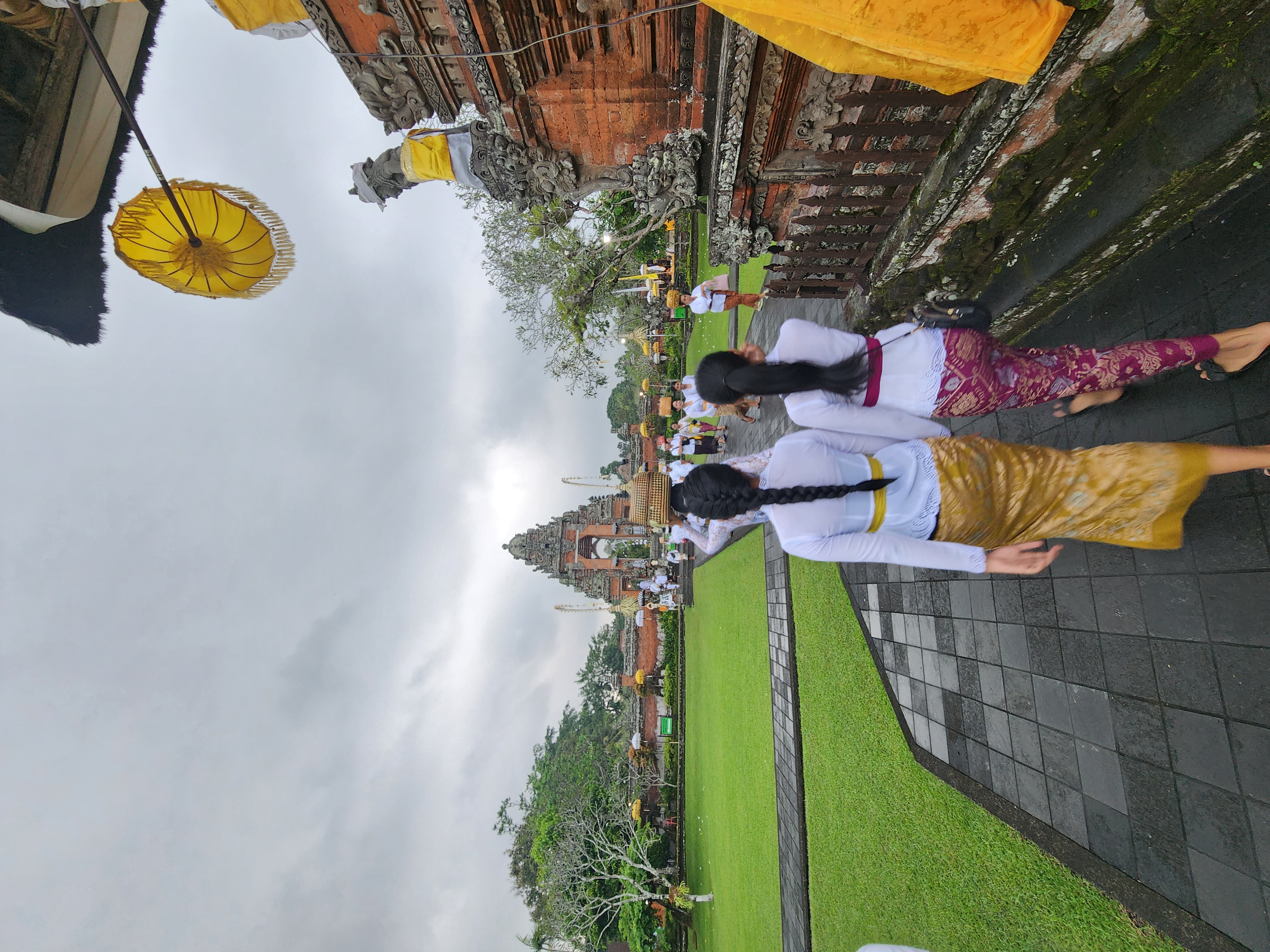
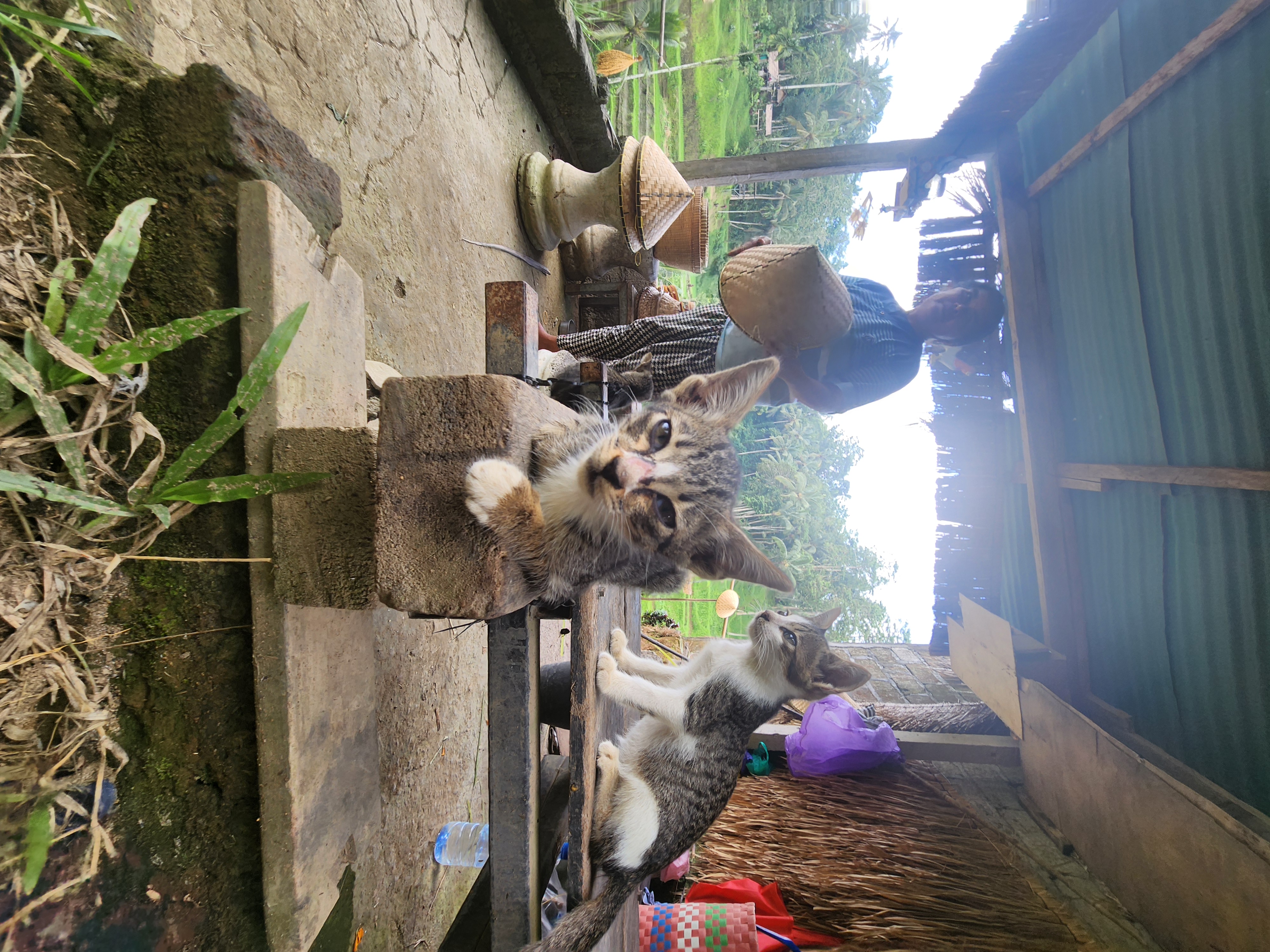
What I loved most was not a landmark — it was the people. Strangers carried themselves with a softness I do not take for granted: patient, kind, quick to smile, and unmistakably grateful in a way that did not feel performative. There is a culture of gratitude here that is almost infrastructural — respect as default, hospitality as habit, not as a campaign.
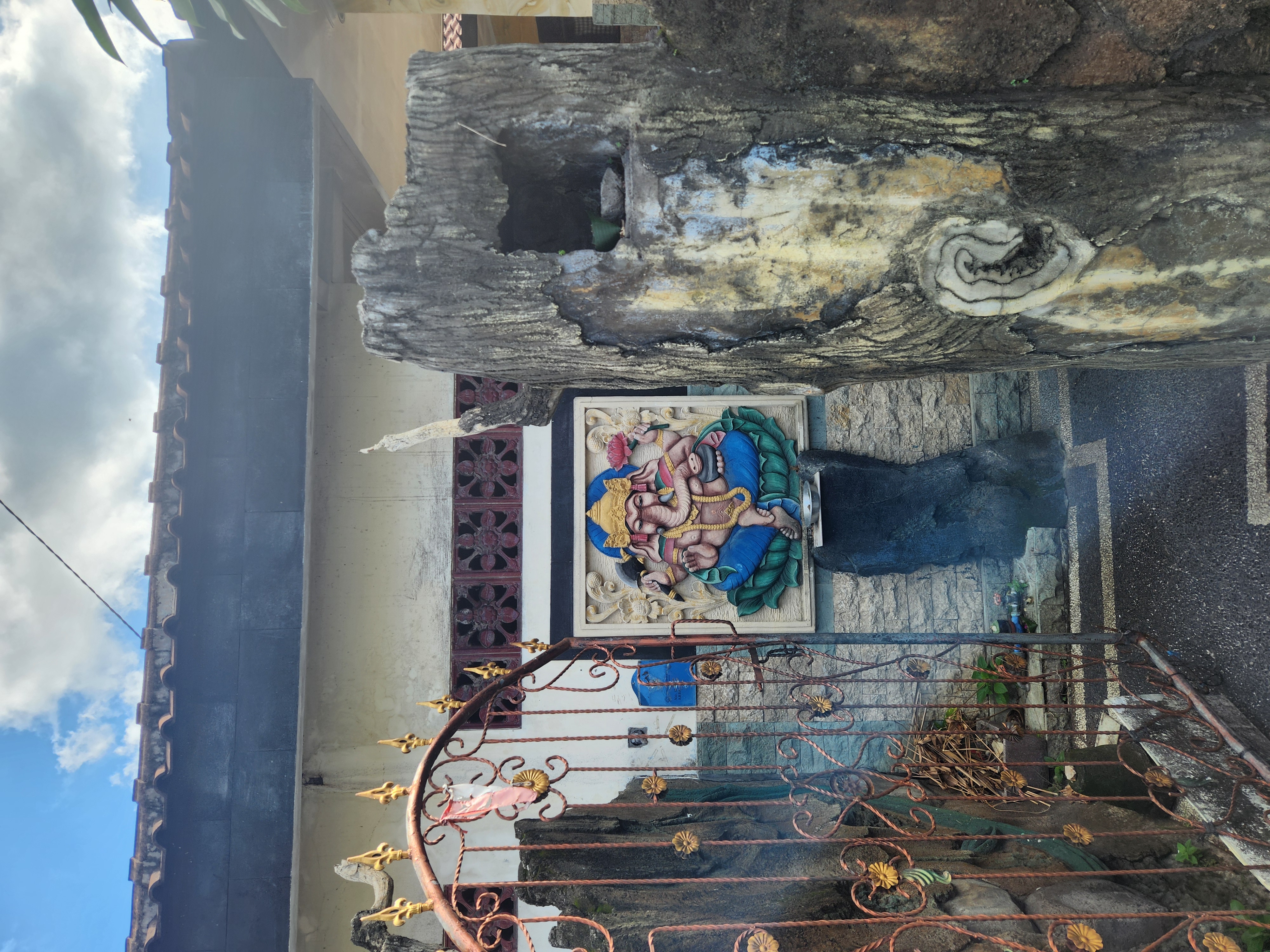
In the early mornings, I watched families pray — quietly, precisely — placing flowers on home altars and along the street as part of daily devotion. The repetition humbled me. It reminded me of my grandmother in Guyana when I was a boy: the house still dark, the day not yet loud, her voice threading through a private conversation with God before the world barged in. I come from a Hindu family; seeing devotion woven into ordinary sidewalks in Bali felt like recognition across distance.
Indonesia is home to the world's largest Muslim population (well over two hundred million people). Bali is not a statistical summary of the whole country — on the island, Balinese Hindu tradition is dominant, which is one reason the rhythms of temple life, offerings, and ceremony are so visible everywhere you walk. The contrast stayed with me: a Hindu-majority pocket inside a nation where Islam is the majority faith nationwide — not a trivia fact, but a lived texture you feel in how days are shaped.
I also thoroughly enjoyed the ceremonial dances — legong, barong, the pieces threaded into the programs I saw. They were beautiful the way serious craft is beautiful: not flashy for tourists alone, but elaborate — costumes, gamelan, gesture sharpened by repetition until every tilt of the head carries meaning. I could have watched for hours. The dances felt like story and prayer sharing the same stage, and I left grateful that something so intricate is still handed down instead of only photographed.
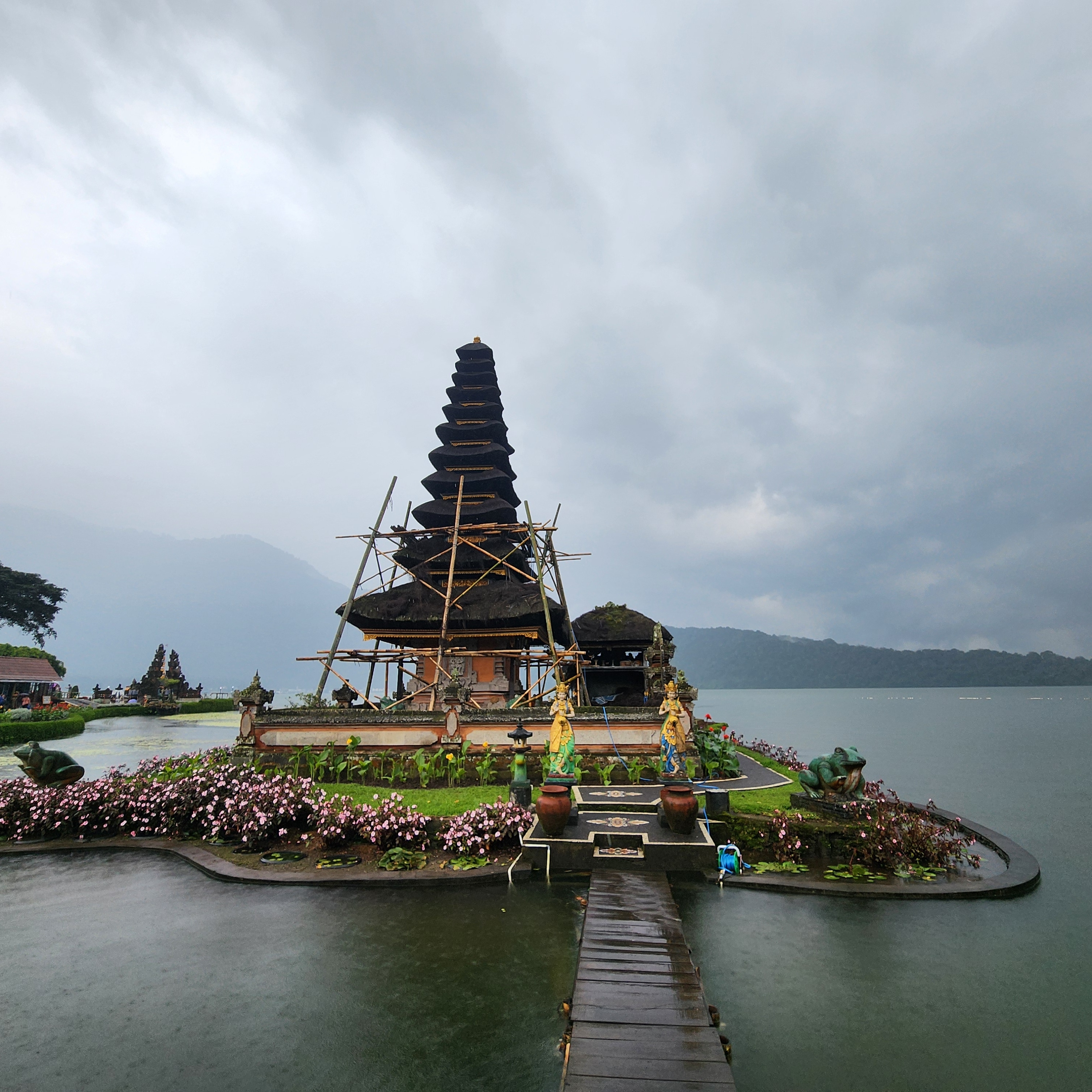
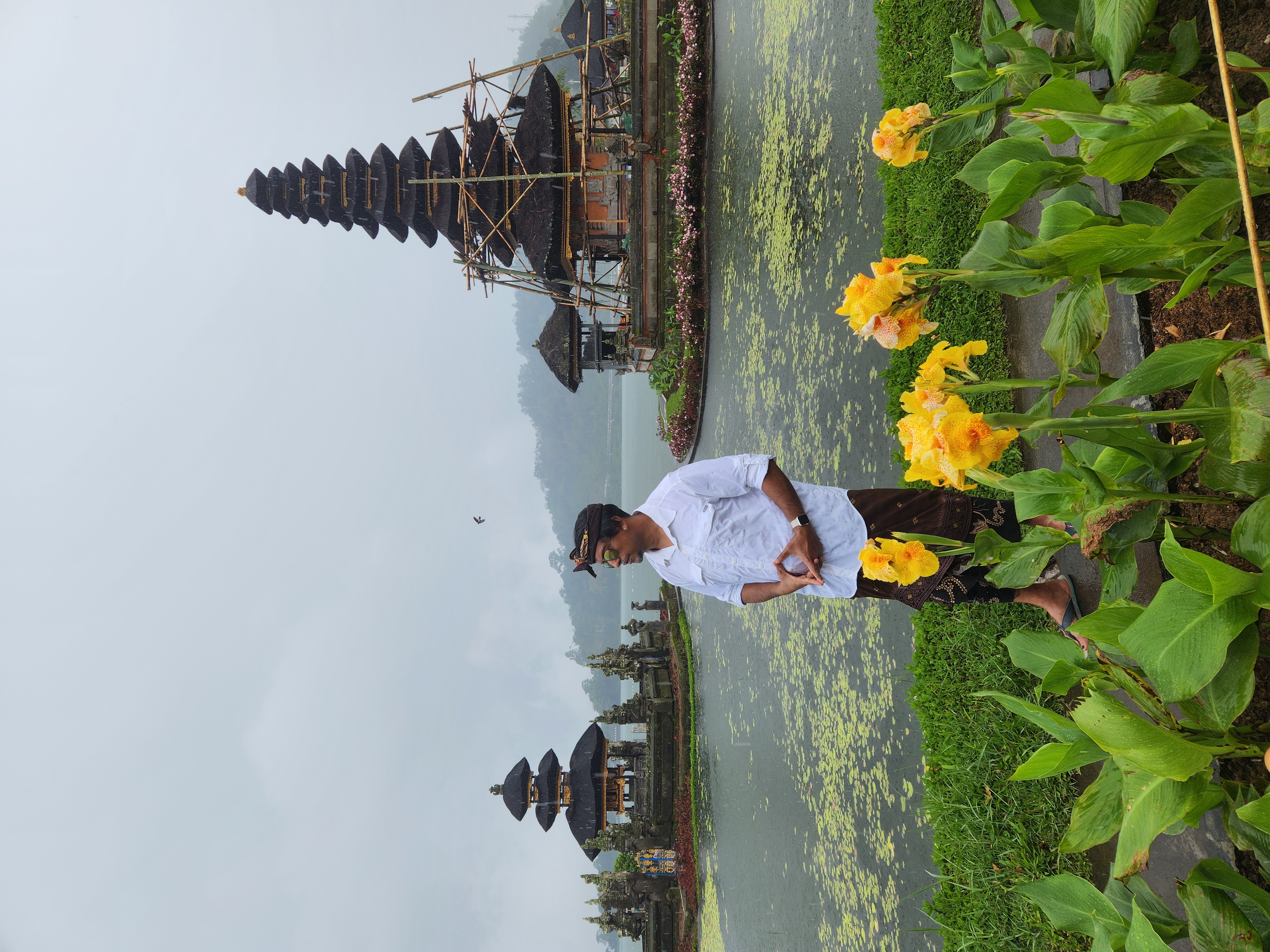
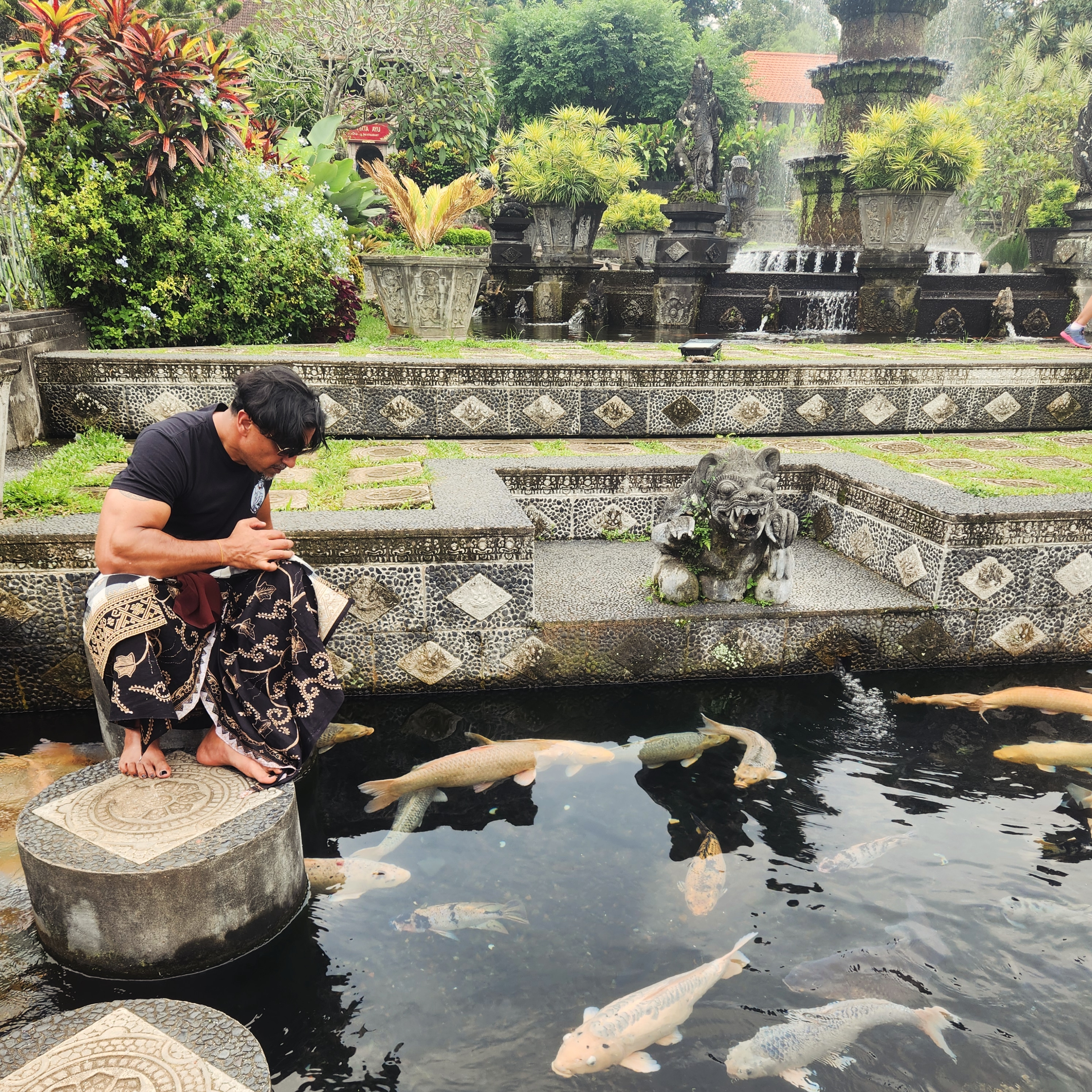
The temples were amazing in their own right — tiered shrines, split gates, courtyards where frangipani and smoke did half the decorating. Walking them, I kept thinking of Nepal: not because Bali is a duplicate, but because the same kind of hush arrives when stone has been prayed over for generations and you are clearly a guest inside someone else's living faith. In other moments the island rhymed, for me, with what I love about Thailand and Nepal — the courtesy, the patience with ritual, sacred architecture treated as a public room rather than a relic behind glass. I love all three places. Bali stole my heart.
III · The table
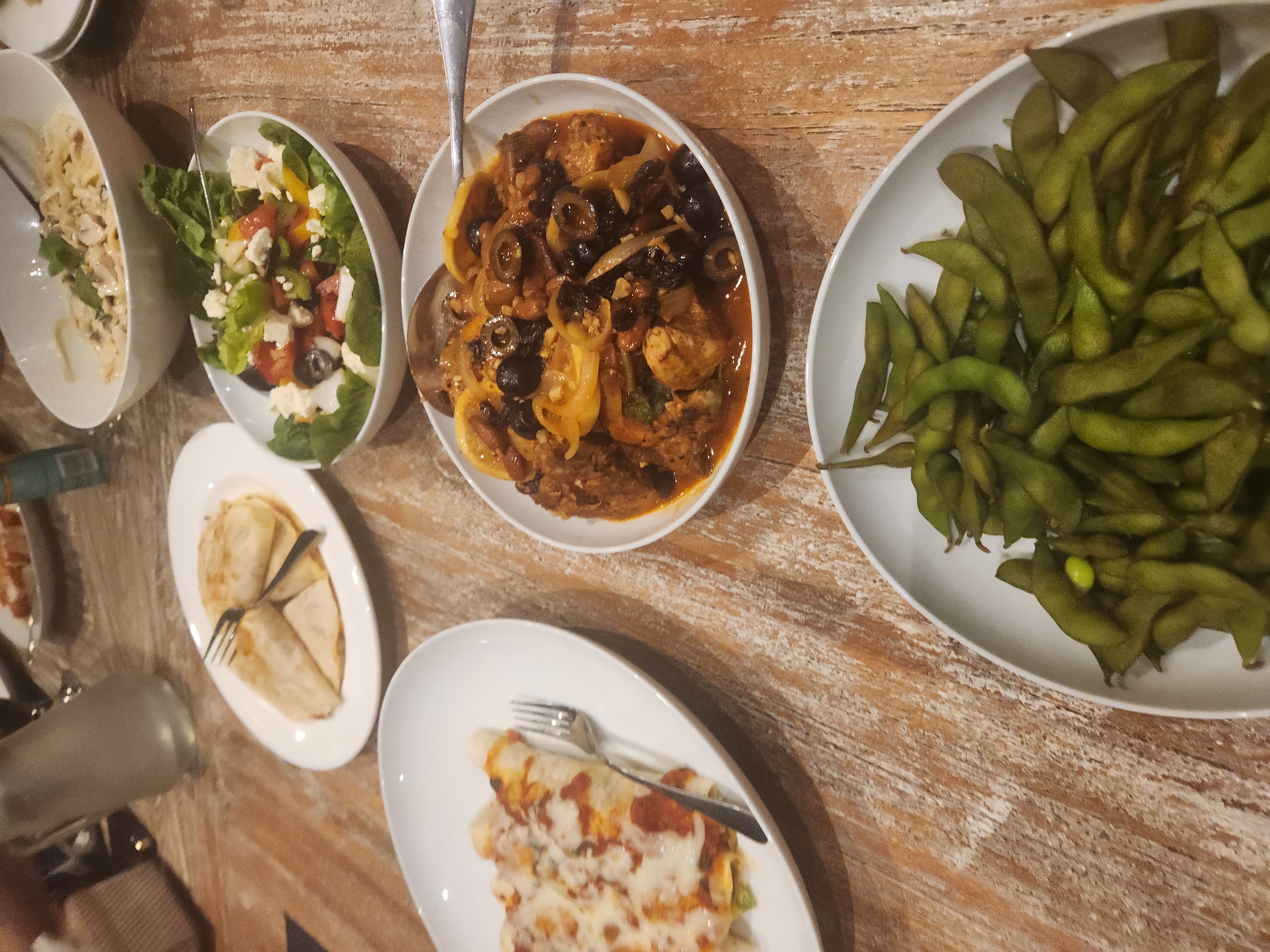
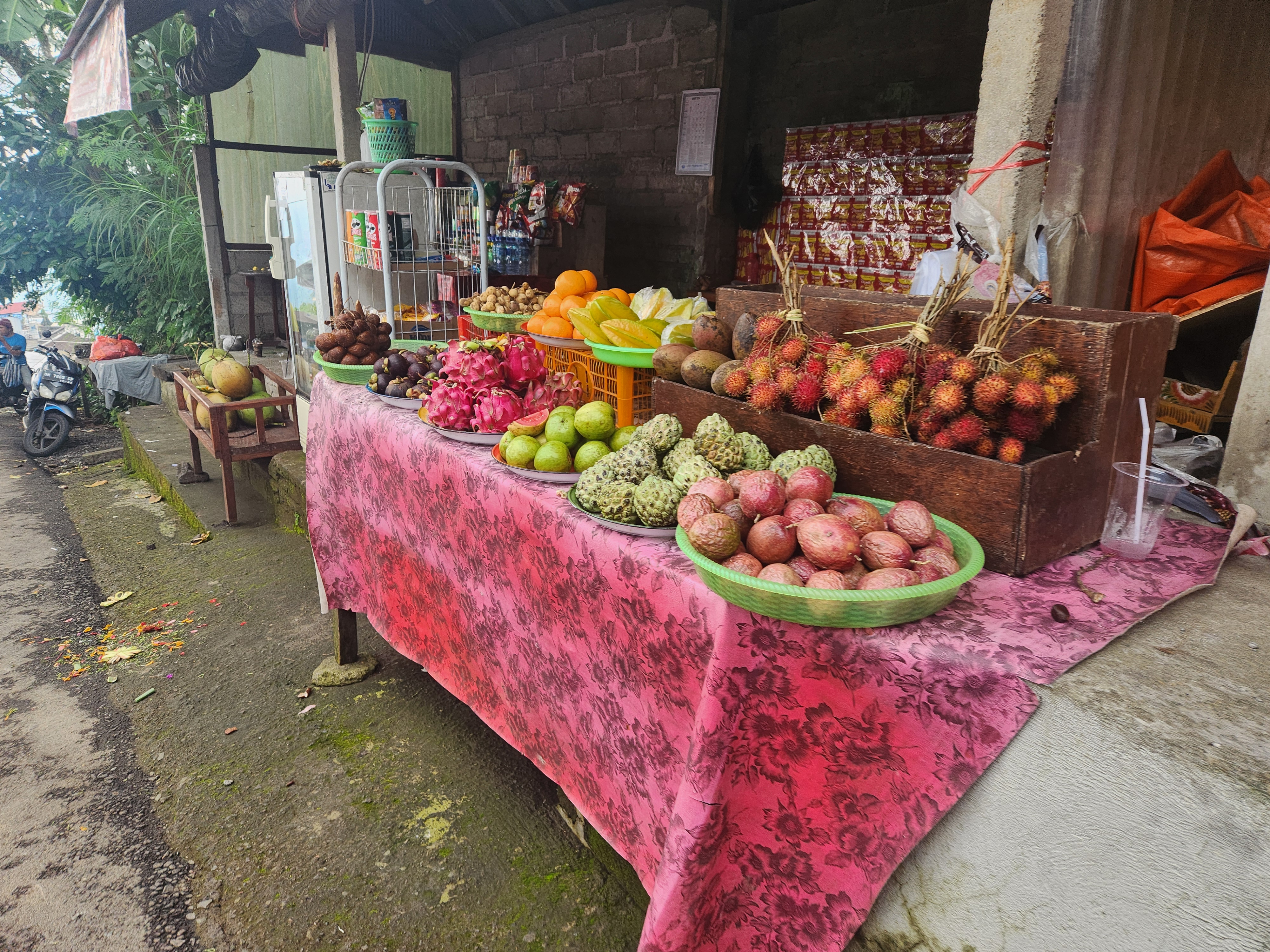
I love Asian food the way some people love music: broadly, deeply, and with a long list of favorites that embarrasses no one but me. Bali rewarded that appetite without trying to impress you with novelty for novelty's sake. There was sambal that stung in the best way, rice that tasted like it remembered the field, soups that clarified the afternoon, and fruit so absurdly ripe it felt like cheating — mango and papaya and dragonfruit and whatever the vendor insisted I try because today's batch was special. I could write another essay only about breakfast. Maybe I will.
The offerings are not the ritual. The repetition is.
I have spent most of my working life optimising systems — distributed ones, secure ones, expensive ones. I know what it costs to keep something running. What I had not felt in a long time was a place that treated daily attention as the substrate of everything else: beauty as discipline, gratitude as etiquette, food as care. Bali did not fix my quarter. It reminded me what a human pace can look like when you stop apologising for needing one.