
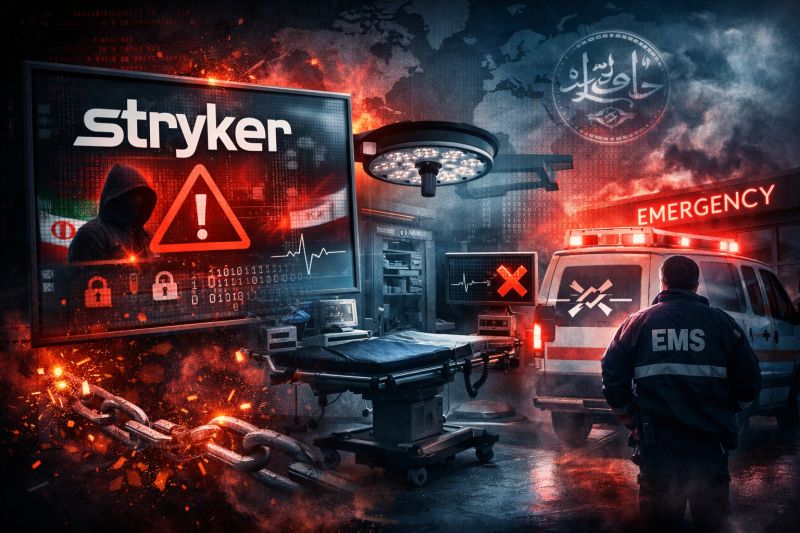
Stryker's cyberattack is more than another security headline. It is a reminder that cyber risk in healthcare is now operational risk, supply-chain risk, and in some cases, patient-impact risk.
What stands out to me is not just who may be behind it, but who was targeted.
Stryker is not simply a large enterprise. It is a major medical technology supplier embedded across hospitals, emergency care, and clinical workflows worldwide. When a company in that position experiences a global disruption, the effects can extend far beyond corporate IT and into logistics, service delivery, and trust across the healthcare ecosystem.
That is the bigger lesson here.
For years, cybersecurity discussions have focused heavily on ransomware, data theft, and compliance. Those still matter. But incidents like this show that in healthcare and MedTech, cyber resilience is inseparable from operational resilience.
When core systems, endpoints, collaboration tools, and connected workflows go down, the impact is not confined to IT. It can quickly affect how organizations communicate, coordinate, process orders, support customers, and continue serving partners under pressure.
Three takeaways for leaders
Geopolitically motivated cyberattacks are no longer someone else's problem.
MedTech manufacturers, healthcare suppliers, and other operationally critical organizations are clearly in scope. Even when patient care is not directly disrupted, the operational and trust consequences can be significant.
Centralized digital dependencies can become single points of failure.
If your identity layer, cloud environment, endpoint fleet, or collaboration platform is disrupted, how much of the business can still function safely and manually? That question belongs in every resilience review.
Continuity planning has to go beyond backup and recovery.
Alternate communications, offline procedures, segmented environments, manual ordering paths, and practiced crisis leadership all matter when the digital backbone is suddenly unavailable.
What this really comes down to is resilience. Cybersecurity is not just about keeping data safe anymore. It is about preserving the ability to function.
In healthcare, that can make all the difference.
References
Topics: Healthcare cybersecurity, cyber resilience, Health IT, MedTech, operational resilience, digital transformation, healthcare innovation, risk management, business continuity.
Related reading
Cybersecurity Alert: UnitedHealth Group's Change Healthcare Faces Systemic Attack
The Change Healthcare cyberattack showed how healthcare connectivity, patient trust, and continuity of care can be disrupted by systemic digital risk.
Breach Alert: Former Employee's Account Compromises State Government Network
A state government breach shows why dormant accounts, weak offboarding, missing MFA, and overprivileged identities remain dangerous attack paths.